Understanding and managing stress
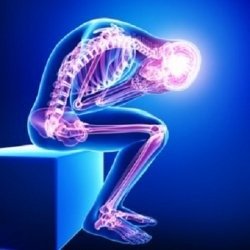
Stress can affect how people think, feel, communicate, work and respond to everyday demands
Effective stress management combines early recognition, practical coping skills, rest, relationships, healthy routines, action on the source of pressure and professional help where needed.
Within CBRT™, visual focus, conscious breathing, structured relaxation and caring communication create time to pause and may help a participant describe what they are experiencing.
Expert contribution by Professor Terry Looker and Dr Olga Gregson
By Professor Terry Looker and Dr. Olga Gregson, Authors of "Teach Yourself Managing Stress."
About Stress
Today, many say that we live in an age of stress. The fast-paced, highly competitive, complex, crowded and polluted environment is held responsible for what seem to be at times, intolerable demands and pressures on our time and energy. Yet, for most of us, we live in a society where our essential needs can be met readily; food, water, shelter and warmth are easily available and science and technology has improved the quality of our lives yet despite all this we frequently hear people saying, “I feel stressed: my mental and physical health, my relationships and my work performance are suffering”. Never before has it been so important for us to find ways and time to unwind.
Managing stress is a skill we can learn and practise but before we begin it is helpful to understand what we are dealing with; know thy enemy!
Stress defined
Stress affects everyone. It is a mental and physical state, which is a necessary and essential part of our lives. We need our stress response to adapt to the continual changes of our environment and to keep us on our toes to survive. Stress is normal and necessary for life.
The stress response evolved to enable us to deal with life-threatening dangers by quickly preparing the body for physical action: to stand and fight or to run away. For our early ancestors in a harsh and inhospitable environment, threats were predominantly physical and satisfying the need for food and warm shelter was a struggle.
Today life in our society is relatively less physically threatening and demanding, however, it is far more psychologically threatening. Threats to our self-esteem, our sense of security, our role in society and our relationships with family, friends, work colleagues and fellow humans are the ‘fangs’ of the sabre-tooth tiger. Confronted by these threats we respond just as though the tiger were there; we activate our stress response. Frequently, however, there is neither the need nor the opportunity for physical action. Instead what happens for most people is that we become impatient, irritated and angry. We fume. We become anxious and depressed. Over time this can affect our well-being.