CBRT preparation for NHS Entry
CBRT is delivered by accredited and assured Practitioners who have completed a two-day training programme by National and Regional Trainers. Practitioners are trained to deliver CBRT Relaxation Support Sessions as either a 1 : 1 talking therapy relaxation intervention or group activity for up to as many as 20 people. Delivered through a socialised environment in a clinic or community, helping people to support each other and de-stigmatise mental health. CBRT Sessions bringing Wellness and Wellbeing to a multi-cultural and wide group of people.
CBRT Relaxation Support Sessions for individuals and groups of up to 20 people has been in use in mental health support since 2005. CBRT provides a Mindfulness approach for Patient groups and individuals who would benefit from the provision of structured relaxation sessions - helping them learn to relax naturally – e.g. those with symptoms of mild depression or anxiety related conditions.
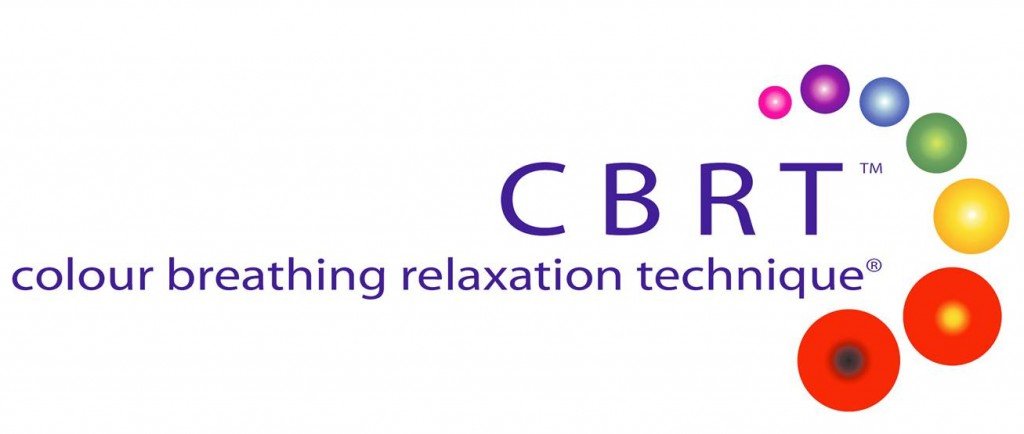
Patients are provided with a “Colour Breathing Disks Easel Chart” as a visual tool to focus on (also see image on top of front page) containing a set of seven coloured disks whilst a) becoming aware of their natural breathing pattern and b) relaxing their body in seven stages. The product is very safe to use, being of printed matter.
The seven “Colour Breathing Disks®” have been specially designed with subtle gradient effects for individuals to use with ease. They are a physical item to see and hold, yet visual point of focus, for individual and group led relaxation support sessions. Individuals enjoy using CBRT as a relaxation technique and using colour as a means of expressing how they feel.
The service need identified by NHS mental health workers during development
CBRT™ was developed in response to a recognised shortage of trained mental-health and wellbeing support and the need for stronger social connection, community development, peer support and earlier intervention.
Between 1 April 2019 and 31 March 2020, NHS referral data recorded 1.17 million referrals starting treatment. Of these, 606,192 completed their course of treatment, 51.1% moved to recovery and 48.9% did not move to recovery.
The current mental-health context in England
The latest national survey found that 22.6% of people aged 16 to 64 in England were living with a common mental-health condition in 2023/24, compared with 18.9% in 2014. Among people aged 16 to 24, the figure was 25.8%.
Centre for Mental Health estimates that mental ill health costs England £300 billion each year through its economic, human, health and care impacts.
Over the past quarter-century, successive UK governments have introduced mental-health strategies, targets and major NHS reorganisations. Yet access, workforce capacity, continuity of care, prevention and community support remain major unresolved problems. The cumulative result is a long-term failure of government policy and NHS system stewardship across successive administrations, not the failure of one political party or one policy cycle.
CBRT™ development through continuing NHS change
The Health and Social Care Act 2012 created one of the largest reorganisations in the history of the NHS in England. At the time, the Government estimated that the transition would cost between £1.2 billion and £1.3 billion. Clinical Commissioning Groups became statutory commissioners in 2013.
Lord Darzi’s independent investigation described the 2012 changes as a ‘costly and distracting process of almost constant reorganisation’ and concluded that Clinical Commissioning Groups had effectively been ‘set up to fail’. In November 2025, the Department of Health and Social Care stated that the 2012 reorganisation had led to worse care at soaring costs, with taxpayers paying more and receiving less.
Clinical Commissioning Groups were abolished in 2022 and replaced by Integrated Care Boards. Within four years, Integrated Care Boards were required to reduce their running costs by 50%, with many entering clustering, consolidation or merger arrangements. The decision to abolish NHS England and transfer its functions into the Department of Health and Social Care added another system-wide restructure.
Mental-health services were under growing pressure throughout this period. Lord Darzi’s investigation found that the overall mental-health workforce fell by 9.4% between 2010/11 and 2016/17, while the number of mental-health nurses fell by 13%. Although the workforce later expanded, mental-health nurse numbers did not return to their 2009/10 level until 2023/24, while demand and referrals continued to rise. The investigation also reported that mental health represented more than 20% of the disease burden but received less than 10% of NHS expenditure.
The recent position remains critical. On 7 August 2026, The Guardian reported that a national survey of 37 NHS mental-health providers conducted by the NHS Alliance found that 68% expected to reduce or close some services during 2026/27. The survey also found that 59% expected to freeze vacancies and 57% expected to reduce clinical staffing. Talking therapies, addiction support, crisis care and community mental-health programmes were among the services potentially affected.
Sources: Hansard, NHS Reorganisation Cost (10 January 2012); Lord Darzi, Independent Investigation of the NHS in England (12 September 2024); Department of Health and Social Care, NHS reform announcement (11 November 2025); Survey of Mental Health and Wellbeing, England, 2023/24; Centre for Mental Health, The economic and social costs of mental ill health; and The Guardian, 7 August 2026.
Mental health services are coming under extraordinary pressure as a result of rapidly rising demand for care and very tough financial conditions.
Alex Stewart, Assistant Director of the NHS Alliance’s Mental Health Network,
quoted by The Guardian, August 2026.
SOURCE LINK:
The Guardian — Millions in England face longer waits for mental health care as NHS providers plan cuts
The current mental-health context in the United States
The 2024 National Survey on Drug Use and Health, released by the US Substance Abuse and Mental Health Services Administration in July 2025, reported that 61.5 million US adults — 23.4% of the adult population — had experienced a mental illness during the previous year. This included 14.6 million adults, or 5.6%, living with a serious mental illness.
Of the 61.5 million US adults who had experienced a mental illness, 29.5 million did not receive mental-health treatment during 2024.
Federal workforce data as at 31 December 2025 identified 6,807 designated Mental Health Professional Shortage Areas, covering approximately 137.1 million people. Within those designated areas, 27.3% of the assessed mental-health workforce need was recorded as being met, and approximately 6,800 additional practitioners were estimated to be required to remove the shortage-area designations.
Sources: US Substance Abuse and Mental Health Services Administration, 2024 National Survey on Drug Use and Health; and KFF analysis of US Health Resources and Services Administration Designated Health Professional Shortage Area data as at 31 December 2025.
Why this current context matters
CBRT™ has continued to evolve throughout this 25-year period of policy and structural change, responding to mental-health needs that remain unresolved. The continuing pressure on services, workforce capacity and access strengthens the case for carefully governed, measurable and person-centred first-tier mental-health support.
Preparation for healthcare delivery
CBRT™ has been delivered by Practitioners completing a two-day training pathway. Earlier delivery included Individual Sessions and Group Sessions of up to twenty people. The current person-centred model uses typical groups of five to six and normally no more than ten.
The process uses a Colour Breathing Disks© Easel Chart containing seven graduated Colour Breathing Disks© while participants become aware of breathing, relax the body in seven stages and use colour to help communicate how they feel.
CBRT™ Relaxation Support Sessions® have been delivered by trained Practitioners throughout Programme development since 2005, including by an NHS GP.
A policy matter of national interest
Many thousands of people have undertaken CBRT™ sessions since 2005. As one service example alone, more than 275 people living in areas of high economic and social disadvantage have been supported by one provider since 2017 to develop coping skills and enhance quality of life, health and mental wellbeing.
An NHS GP based in Yorkshire trained as a CBRT™ Practitioner in 2005 and used CBRT™ with NHS patients in her practice.
Mental-health community teams were trained in Northern Ireland, with some programmes part-funded by The National Lottery.
CBRT™ was invited to showcase at the first National Innovation Healthcare EXPO and was congratulated by the Show Manager as the most popular exhibit.
Independent NHS due diligence included a 92.53% score on the former NHS National Innovation Centre Technology Scorecard, where CBRT™ was recognised as a Med Tech.
Senior NHS staff worked on a proposed QIPP cost-saving training initiative described as patient-centred, recovery-focused and supportive of self-care.
A senior NHS manager’s due-diligence (NHS South of England) conclusion recorded that the potential patient benefits of CBRT™ were aligned with the NICE Quality Standards for Depression.
Meetings haven taken place throughout the CBRT™ development stages with senior NHS England directorate and Department of Health staff concerning IAPT, children and young people, older people and dementia.
A former IAPT Director described CBRT™ as a ‘policy matter of national interest’.